

The fight to protect and bolster B.C.’s endangered southern resident killer whale population has suffered a tragic blow.
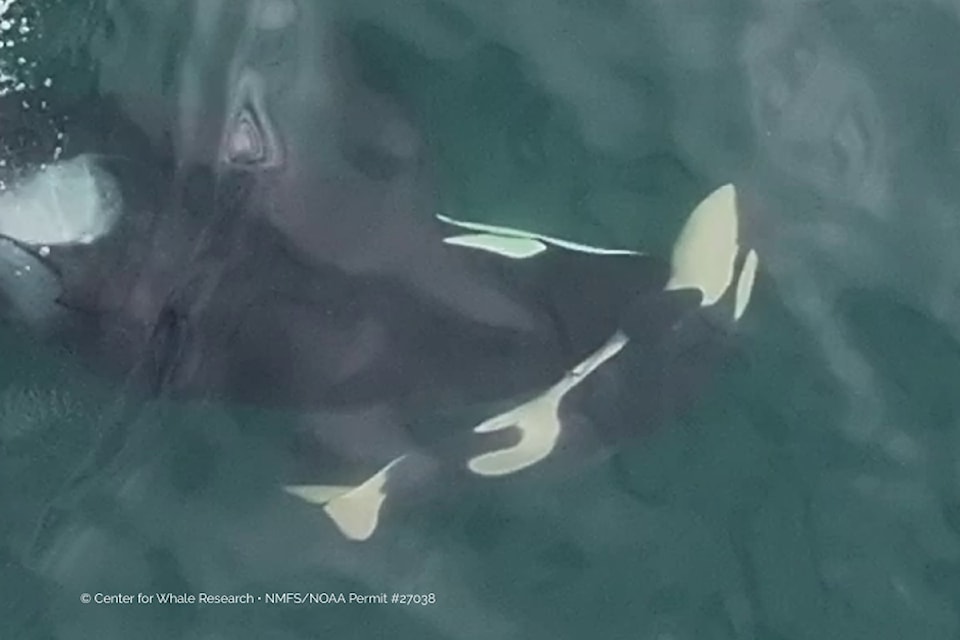
An orca was seen pushing a dead female calf Friday (Sept. 12) in Rosario Strait, east of the San Juan Islands.
The death was confirmed by researchers from Washington-based Center for Whale Research, who found southern resident J36, also known as Alki, travelling with the calf and its umbilical cord still attached.
Based on its size, researchers estimate the calf was either full-term or near full-term.
“It is unclear if this was a stillbirth or if the calf died shortly after birth," said a statement from Center for Whale Research. “Based on when we last observed J36, this calf would have been born within the last three days.”
The organization says it will now work with other research teams to piece together what information they can about the calf and Alki’s status.
Born in early 1999, this is the 26-year-old female’s fifth documented pregnancy.
According to the Orca Behaviour Institute, Alki's first calf lived less than two years after it was born in 2015. She is also believed to have lost late-stage pregnancies in 2019, 2021 and 2023.

Alki’s most recent loss echoes that of another southern resident orca mom, J35, better known as Tahlequah. In January, she was seen travelling with a dead calf draped across her snout or balanced on her head.
Based on limited sightings, Tahlequah kept her calf with her for at least 11 days.
It was the second time she had been witnessed performing what some experts described as a 'grief procession'. In 2018, Tahlequah drew international attention when she carried her dead newborn for 17 days, covering more than 1,600 kilometres.
The loss of another calf is a stark reminder of the southern resident’s fragile future.
The Center for Whale Research's southern resident census in 2024 recorded a decline in population from 75 to 73 individuals.
This year, scientists from Canada, the U.S. and Europe called for "urgent and bold action" to save the endangered killer whales from extinction, urging measures such as vessel noise reduction and prioritizing the whales’ access to chinook salmon, their primary prey.
But alongside the concern, there are glimmers of hope.
While the 2025 census has not yet been released, it will include two new female calves – J62, first spotted in December, and J63, first seen in April.
According to Orca Behaviour Institute, both are “growing and active,” already showing distinct personalities.
J62 is often close to its mom and other family, says the organization, while J63 has earned a reputation as “more of a wild child,” leaving her mom to work on perfecting her breaches.
“She's gotten higher air than I think I've ever seen from a killer whale calf,” said a social media post from the organization.
“And so as another season passes, we celebrate the whales that are here, mourn the ones we have lost, and continue to fight for the future of those yet to be.”


